If you’ve ever struggled to fall asleep—or stay asleep—you’re not alone. A good night’s sleep is essential for feeling your best, yet so many people toss and turn through the night. Before turning to sleep aids or medications, consider natural ways to support your body’s ability to rest.
Improving your sleep naturally is possible, and it starts with small, intentional habits that signal to your body and mind that it’s time to wind down. Let’s explore some easy-to-follow strategies to help you sleep better, feel better, and wake up refreshed.
1. Create a Consistent Sleep Schedule
One of the best ways to improve your sleep is to go to bed and wake up at the same time every day—even on weekends. Your body thrives on rhythm, and a consistent sleep schedule helps regulate your internal clock.
Try setting a regular bedtime that allows for 7 to 9 hours of sleep and stick with it as much as possible. Over time, your body will begin to recognize when it’s time to rest, making it easier to fall asleep naturally.
2. Build a Calming Bedtime Routine
A relaxing evening routine signals to your brain that it’s time to slow down. Choose calming activities that help you unwind, such as:
Reading a book
Taking a warm bath
Gentle stretching
Journaling or writing down a gratitude list
Listening to soft music or a calming podcast
Try to start your routine about 30 to 60 minutes before bed. Avoid anything that feels stimulating or stressful, like checking emails or watching intense TV shows.
3. Limit Screen Time Before Bed
Phones, tablets, and TVs emit blue light that can interfere with the production of melatonin, a hormone that helps you sleep. Try turning off screens at least an hour before bed to give your brain a chance to wind down.
If you do need to use a screen in the evening, consider turning on a blue light filter or wearing blue light-blocking glasses.
4. Create a Comfortable Sleep Environment
Your bedroom should feel like a peaceful retreat. Keep your sleep space clean, quiet, and cool. Here are a few ways to set the scene:
Use blackout curtains to block light
Turn on a fan or white noise machine to drown out background noise
Choose soft, breathable bedding
Keep the temperature cool—most people sleep best between 60 and 67 degrees Fahrenheit
Even small changes to your environment can make a big difference in how well you sleep.
5. Be Mindful of What You Eat and Drink
What you consume during the day affects your sleep at night. To support restful sleep:
Avoid caffeine in the afternoon and evening
Limit heavy meals close to bedtime
Stay hydrated, but reduce fluids an hour before bed to avoid waking up for bathroom trips
Skip alcohol before bed—it may make you sleepy at first but can disrupt your sleep cycle later in the night
6. Move Your Body During the Day
Physical activity helps regulate your energy levels and can improve the quality of your sleep. Aim for at least 20 to 30 minutes of movement most days of the week. This could be walking, stretching, dancing, or any activity you enjoy.
Try not to exercise too close to bedtime, as it may leave you feeling too energized to sleep.
7. Get Morning Sunlight
Exposure to natural light during the day—especially in the morning—can help set your body’s internal clock. Open your curtains first thing in the morning, step outside for a few minutes, or take a walk in the daylight.
Natural light signals to your brain that it’s time to be awake, which helps improve your sleep rhythm when it’s time to wind down.
8. Manage Stress and Worry
If your mind races at night, it may be helpful to find ways to reduce stress during the day. Practices like journaling, talking with a friend, meditating, or spending time in nature can help calm your thoughts.
If worry tends to pop up at bedtime, try writing down your thoughts or to-do list earlier in the evening so your mind feels more settled when it’s time to rest.
=====
Improving sleep naturally is about creating a lifestyle that supports rest, rather than pushing or forcing yourself to fall asleep. With a few small changes, your body can begin to respond to a calmer rhythm.
Start with one or two of the tips above, and give your body time to adjust. Sleep is not just a luxury—it’s a foundation of good health. When you sleep better, everything else feels a little easier.
What’s your favorite way to wind down at night? I’d love to hear your tips and experiences in the comments.
Struggling to fall asleep or stay asleep? You’re not alone. Sleep problems are common, but that doesn’t mean you have to put up with restless nights. Quality sleep is essential for your mental and physical health, and with a few simple adjustments, you can improve your sleep patterns. Let’s talk about three key strategies: creating a bedtime routine, reducing screen time before bed, and practicing relaxation techniques.
1. Establish a Bedtime Routine
Your body thrives on consistency, especially when it comes to sleep. A bedtime routine signals to your brain that it’s time to wind down. If you’re constantly going to bed at different times, it confuses your internal clock, making it harder to fall asleep.
How to Create a Routine: Try going to bed and waking up at the same time every day, even on weekends. Spend the last 30 minutes before bed doing something relaxing, like reading a book, stretching, or listening to calming music. Over time, this consistency helps regulate your sleep cycle, making it easier to fall asleep and wake up refreshed.
2. Minimize Screen Time Before Bed
Screens—whether it’s your phone, computer, or TV—emit blue light, which can interfere with your body’s production of melatonin, the hormone that regulates sleep. Scrolling through social media or watching TV right before bed keeps your brain active when it should be winding down.
What to Do Instead: Aim to turn off all screens at least 30 minutes before bed. If you enjoy reading before sleep, try using a physical book instead of an e-reader. And if you can, keep your phone out of reach while you sleep to avoid the temptation to check it during the night.
3. Practice Relaxation Techniques
Stress and anxiety can keep your mind racing long after you’ve climbed into bed. That’s where relaxation techniques come in. These simple practices can calm your mind and help you drift off to sleep more easily.
Techniques to Try: Breathing exercises, progressive muscle relaxation, or gentle stretching can help relax your body and quiet your mind. Try a breathing technique like 4-7-8 breathing (inhale for 4 seconds, hold for 7, and exhale for 8) to release tension and prepare your body for sleep. Guided meditation is another great tool to help you let go of stress before bed.
Final Thoughts
A good night’s sleep is within reach. By establishing a consistent bedtime routine, cutting down on screen time, and practicing relaxation techniques, you can improve both the quantity and quality of your sleep. If you’re ready to create a personalized plan for better sleep, I’m here to help! Let’s work together to find the solutions that work best for you.
In today’s fast-paced world, maintaining wellness can be a challenge. Many of us struggle with common issues like stress, fatigue, poor sleep, and difficulty managing weight. As a wellness guide, I want to shed light on these issues and offer practical solutions to help you take control of your health.
1. Stress and Anxiety
Stress and anxiety are among the most prevalent wellness concerns. Whether triggered by work, relationships, or daily life, chronic stress can lead to physical and mental health problems, including anxiety, high blood pressure, and heart disease.
A Solution for Stress And Anxiety:
Incorporating mindfulness practices such as guided meditation or breathing exercises can significantly reduce stress. In just 5-10 minutes a day, you can experience a sense of calm and relaxation.
2. Fatigue and Low Energy
Feeling tired all the time? Fatigue and low energy often result from poor nutrition, lack of exercise, or dehydration. Without addressing these root causes, you may feel drained and sluggish throughout the day.
Solutions for Fatigue And Low energy:
Hydration, balanced meals rich in nutrients, and regular physical activity can revitalize your energy.
3. Poor Sleep
Insomnia and poor sleep quality are common wellness problems that affect mood, memory, and productivity. Improving sleep is essential for mental and physical health.
Solutions for Sleep Problems:
Establishing a bedtime routine, minimizing screen time before bed, and practicing relaxation techniques can enhance sleep quality.
4. Weight Management
Weight management is a common issue, often compounded by stress, busy schedules, and unhealthy habits. Sustainable weight loss isn’t about fad diets, but rather building lasting habits.
Solutions for Weight Management:
Mindful eating, regular movement, and mindset shifts can make all the difference.
If you’re ready to take control of your wellness journey, I’m here to help. Contact me today to learn how we can work together to create a personalized wellness plan that supports your goals.
You filled your diffuser with beautiful oils, you rolled calming nourishing pure-fume on your neck, wrists, anywhere, everywhere.
You fluffed your beautiful sheets and pillows. You have the most delicious book ever written beside your bed.
Your bedroom is cool, it smells inviting and relaxing, the lighting is soft .It’s ready for you to leave your troubles at the door and snuggle into sleepy time.
Feeling clean, cool, relaxed, you climb into bed, the beautiful soft sheets and soft fluffy pillows are waiting for you. You settle in for a few minutes with your favorite author, and feel your tension and busyness of the day melt away.
When you are ready, you turn off your side table lamp and the room goes to a luscious welcoming darkness. The bed is the most comfortable bed ever, your body is clean and fresh, the room is cool and dark.
You snuggle down into the covers, close your eyes, take a few deep breathes, and off you go into a deep restful rejuvenating sleep.
Your lips form a slight smile as you drift off into that deep nourishing sleep.
The morning sun peeks through your curtains, the birds are singing their morning songs, your eyes open and you realize that you are ready, eager to begin your day.
Your body, your mind are ready. Your body, your mind have had a nice long chunk of time to collect, sort, and store the nourishing nuggets from yesterday.
You are ready to glide through today with joy, grace, and ease.
Because you just slept like a baby.
Suzanne Horrocks Wellness
To learn more about how to sleep like a baby night after night, read this post.
This article includes affiliate links. As an Amazon Associate I earn from qualifying purchases.
Sleep is important for healthy metabolism, a healthy immune system, and healthy organ function, just to name a few things. During restful sleep, your body heals and your brain gets a necessary reboot. Just like your electronics need a reboot, so does your brain.
Up to 90 percent of adults report mental stress and anxiety as the number one reason that they can’t shut their brains off at night in order to easily fall asleep.
According to Dr. Ashley Anderson, there are some lifestyle changes that can help improve the quality of your sleep.
1. Own your morning. Get up early or at least on time. Give yourself time to organize your thoughts, and your day. There are anti-anxiety practices that you can do to start your day on the right foot. Things like deep breathing, meditation, journaling, or spiritual reading can help you begin the day in a calm, stress free mood. Unlike getting up at the last possible minute and rushing to get to work on time.
2. Create space within your day to de-stress. Take a break. Stroll outside. Listen to a short guided meditation. Relax in the sun for a few minutes. Take time to relieve some stress during the day to keep it from piling up at bedtime.
3. Create a good night time routine, especially in the last hour before bed. As parents, we know the importance of a good bed time routine for our kiddos. We need one too! Things like a warm bath, relaxing with a good book, dim the lights, low impact stretching, massage, journaling, etc., set you up for a good night’s sleep. Your brain will get in line with the program and pretty soon, you won’t have any trouble falling asleep.
There are some tools you can use to help you fall asleep easily. Namely essential oils. Cedarwood, Frankincense, Vetiver, Petitgrain, sleep blends, and more.
I work with doTERRA Essential Oils. Lavender, Roman Chamomile, and Vetiver are my go-to oils. doTERRA has curated a sleep wellness program which includes bath salts, some body butter infused with their sleep blend, a gratitude journal, a spritzer/sprayer for the bed linens, and more.
I have been using this program for two months and my sleep has improved noticeably. My energy is more consistent, my memory is better, focusing is easier, my food choices are better. The best thing is my good mood. I wake up looking forward to my day.
With my established bedtime routine, my brain is recognizing the signals and I’m ready for lights out quickly and fall into a deep restful sleep easily. This is after years of not getting enough sleep. The difference is stark.
Getting a good night sleep consistently is one of the best things you can do for yourself, your loved ones, your life.
#SleepLikeABaby
To learn more about how to #SleepLikeABaby night after night, read this post.
Did you know getting a good night’s sleep is key to living a wellness lifestyle?
Not just one night but night after night after night, having a good sleep routine is vital to living healthy.
I often think of it like rebooting our computers. You know how over time without a reboot or defrag your computer will begin to respond slower and slower until eventually it doesn’t even want to start up?
It’s the same way with humans. During healthy sleep, our brains and bodies get a reboot.
A good night’s sleep has good affects on every system in your body.
Can we talk about your sleep? Is it good or could you use some help?
Lack of good sleep can affect our health in many ways. Maybe you have experienced some of these at one time or another.
*difficulty maintaining weight or losing excess *negative emotional responses (anger, fear, etc.) *lack of motivation
Lack of good sleep has a negative impact on nearly all of your body’s organs and systems.
Just as poor quality sleep has negative effects, getting good sleep has positive effects.
A good night’s sleep can
*boost your immune system *prevent weight gain *strengthen your heart *increase productivity *improve your memory
Are you ready to learn what you can do to get a good night’s sleep on a regular basis?
From the Institute of Integrative Nutrition
CIRCADIAN RHYTHM and MELATONIN
These are two natural systems in your body. You have to get them working smoothly and keep them working smoothly to enjoy restful, rejuvenating sleep. As part of Earth, we operate on her systems. When we are out of sync, we don’t sleep well.
First off, circadian rhythms. They are a lot like day/night, darkness/light, sleep/wake.
They are a natural process that regulates our sleep/wake cycle. It repeats roughly every 24 hours.
These natural rhythms are behavioral changes. We go from awake and alert to slowing down and sleeping. This change or rhythm isn’t instant. It needs a period to adjust. The triggers – or signals – match the sun cycle. The sun comes up, and we are triggered to wake up which begins to stop our melatonin production (I will get to melatonin production in a minute). The sun goes down, and we are triggered, through our retinas, to wind down and fall asleep. Our melatonin production begins and continues until the sunlight starts again in the morning.
Secondly, circadian rhythm is a behavior while melatonin is a chemical.
Melatonin is known as the hormone of darkness. That’s because it is made in the dark. Literally. When the sun goes down and night falls, our pineal gland begins making melatonin. As we wind down, our melatonin production winds up, allowing our bodies the time it needs to rejuvenate. It’s nature. It’s a cycle. It’s necessary for good living.
Melatonin is a beautiful chemical. It boosts our immune system. It is an antioxidant. It regulates our metabolism, improves our memory, can ease hot flashes, as well as halts cancer cells. Melatonin isn’t just for sleep. But sleep is for melatonin!
It is vital to good health to do all we can to pacify our circadian rhythms and bring on healthy melatonin production.
Good night, sleep tight
Create a good bedtime routine to set yourself up for a good night’s sleep.
Remember when your kids were little (or when you were little) and they had a bedtime routine? Maybe they got a bath and/or you read them a story. They were on a sleep schedule. You know it was right for them. The same goes for you! You need a schedule and a good routine. One that helps you relax and eases you into a deep rejuvenating sleep.
Here’s a list of habits to cultivate to ensure you are getting the quality of sleep everyone needs:
Your bedroom is for sleep and sex only. Make it comfortable and relaxing with good bedding. Make it dark. Perhaps you need blackout curtains. Quiet. Comfy temperature. Pleasant aromas and ambiance.
Get a good sleep schedule. Go to bed and wake up around the same time every day. Budget time for sleep. Put it in the calendar if necessary. Be careful with naps. You won’t need one soon! Change your sleep schedule gradually.
Get a good bedtime routine. Wind down for 30 minutes. (quiet time, reading, journaling, low impact stretching, relaxation exercises.) Dim the light in the evening. Wear blue light blocking glasses after the sun goes down when using electronic devices or watching tv. Disconnect from your devices one hour before bed.
Pro-sleep activities to do during the day. Get sunlight – either directly or at least open your curtains. Find time to move/exercise. Avoid caffeine after noon. Don’t eat too late – preferably at least 2 hours before bed.
I’m going to reiterate these things because they are THAT important. This is where the magic happens.
Make sure your bedroom is comfy and pleasant. With good bedding. And dark. Do. Not. Sleep. With. The. TV. On. Use blackout curtains if your neighbor’s lights are too bright. No electronics in your bedroom! It must be quiet. (Maybe you need earplugs or a white noise machine.) Turn off the TV!!! (Yes, I said it again.) Your bedroom also needs to be a comfortable temperature – approximately 65F or 18.3C. Use pleasant aromas, namely essential oils.
Get on a schedule. Remember your circadian rhythm is there to help you. It is a gift from nature. It’s there. You cannot escape it. You may as well get in sync. So, go to bed on time. Get up on time. Try not to nap. (You won’t need it soon, I promise.) If necessary, budget time for sleep. Put it in your calendar. It’s not time to figure out tomorrow’s challenges or today’s troubles. If you need to adjust your sleep schedule, do it gradually.
Create a good bedtime routine. Dim the lights in the evening. Disconnect from electronices one hour before bed. Use blue light blockers after sundown. Don’t eat less than 2 hours before bed. Take 30 minutes wind down time. Read a book, journal, do low impact stretching, get or give a massage, have sex, take a warm bath. Fill and turn on your diffuser. Annoint yourself with essential oils for sleep, grounding, or anti-anxiety.
Things to do in the day to sleep better at night. Move your body/exercise. Avoid caffeine after noon. Get sunlight, either directly or by opening your curtains. Dont eat within 2 hours of bedtime.
By cultivating these habits, you are setting yourself up for a good night’s sleep, night after night. It takes time to establish these routines. But soon your brain will be trained and you will fall asleep with ease and stay asleep.
It takes practice. You are retraining your brain and your body. One night of good practices won’t do it. Give yourself the time and patience to reset your inner rhythm and strengthen your melatonin production.
You can do this. You will be amazed how much better your feel.
Feel happy. Feel good.
THE TOOLS
Essential oils for sleep.
Essential oils are for far more than something that smells nice. The use of plant essences – their oils – have been used medicinally for centuries, long before our modern medical industry came to be.
Hippocrates, “the Father of Medicine”, used plants for healing. Greek doctors became master herbalists. They believed nature was a great healer. Many of the ancient Greek natural remedies are similar to our home remedies today.
The use of essential oils isn’t new. It is a return to ancient ways with a modern delivery. They are usually steam distilled or in the case of citrus oils, cold-pressed. Then they are bottled in dark glass to preserve the oils and shipped to our doors.
This is where doTERRA has stepped in. Their philosophy is that potency and purity are the most important aspects of essential oils’ efficacy. doTERRA’s oils are the most tested in the world. To solidify your knowledge, understanding, and trust, see the “Source to You” videos.
Now that I’ve introduced you to essential oils, let me tell you about some that are excellent sleep aids. We have some flowers, a couple of trees, a root, and a blend specially crafted for sleep.
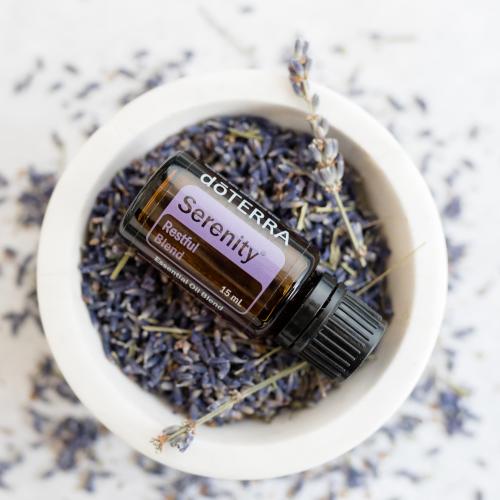
The flowers are Lavender, Magnolia, and Roman Chamomile. The trees are Cedarwood and Petitgrain. The root is Vetiver. doTERRA’s restful blend is Serenity.
Lavender and Roman Chamomile have a reputation for inducing sleep. Magnolia has the same constituent, linalool. Linalool has powerful soothing and relaxing benefits to our emotions and our skin. (Oils are multi-taskers.)
Cedarwood oil is distilled from the needles, leaves, bark, and berries – not the pollen so many of us are allergic to. Petitgrain is distilled from the leaves and twigs of the wild orange tree.
Vetiver is a grass. The oil is distilled from the roots. It’s compounds and constituents provide calming and grounding effects.
An oil blend curated specifically for sleep is doTERRA’s Serenity blend. It’s perfect for de-stressing and unwinding. It melts away tight emotions helping you feel calm and relaxed.
I would like to venture off for a moment and tell you about my experience with sleep.
I became a “two sleep” person. I could only sleep for about five hours at night and was caught in a vicious cycle of not getting enough sleep at night and then needing a nap during the day resulting in not getting good sleep at night and needing a nap the next day. It was a vicious cycle indeed.
I learned that exercise is crucial for me. The need to physically expel excess energy became vital. The second thing I figured out was eating – my diet – what I was asking of my digestive system. Bottom line, I wasn’t giving my digestive system the break it needed to rest and repair. It wasn’t the only system not getting the rejuvenating rest it needed.
I have figured out my energy/stress level. I had realized that I needed to stop eating late at night.
I still needed some help though. That’s where the oils came in.
As a doTERRA Wellness Advocate, I am passionate about these oils. I am dedicated to them. I trust them. I believe in their power.
doTERRA has become my go-to for all things related to essential oils. I jumped in. I’ve committed and invested. These oils have worked wonders for me.
I am sleeping regularly. I am amazed at the changes I feel. My memory is better. Brain fog and forgetfulness are receding. My energy level is high. I am motivated to keep my healthy habits. I make better food choices. I am amazed.
I want this for you too.
Back to the tools. Tools are vital. Can you imagine eating without utensils? Can you imagine styling your hair without a dryer, curler, or even a hairbrush? Tools make life doable.
Essential oils are a supremely effective tool to help ease tension and stress and allow you to gently fall into the restful rejuvenating sleep that your mind, body, and spirit need to function at your optimal level.
Been there. Done that. I hear you. I feel you. It takes practice. It takes getting into a routine.
I am willing to bet that your sleep issues have been with you for a while. They aren’t going away instantly.
You need to create a bedtime routine and stick with it over time. Your brain has to be trained and that takes time. Be patient with yourself. You will turn this around. You will be sleeping like a baby regularly! A deep restful rejuvenating sleep, regularly.
IF you are still having trouble falling asleep, here are some tips:
Use relaxation techniques. Breathing exercises are my #1 choice. I use the 4-7-8 method. Breathe in for the count of four. Hold for the count of seven. Release for the count of eight. Repeat four times. Count at the speed that’s comfortable for you. Over time your counting will become slower as your lungs get used to mindful breaths.
Another relaxation technique is to visualize yourself in a peaceful serene setting.
You can also relax individual body parts. Start with your toes and work your way up. Or start with your neck and work your way down.
Other techniques could be meditation, massage, yoga, tai chi, or sound therapy.
Try different ones or research more relaxation techniques. Remember – you are worth it. You deserve deep restful sleep. It’s worth developing a practice that works for you.
Also, don’t stew in bed. If you need to get up to turn down the lights, just do it. If you forget something, get up and take care of it. If you need to check on the kids or the pets, just do it. Don’t stew!
Keeping a sleep diary could be helpful too. I remember that time I ate a bowl of chili too close to bedtime. Talk about trouble falling asleep! I still remember it, so no need to write that one down. However, keeping a diary can help shed light on recurring disruptions and help you resolve them. A sleep diary can also shed light on what works well.
Give your new habits time to take effect. It takes time to train your brain. Be patient. Be persistent. You got this, friend.
HAVE TROUBLE STAYING ASLEEP?
Set the thermostat to low to mid-60s. Use soothing background music to block out unwanted noise. Get blackout curtains. Remember, our pineal gland makes melatonin in the dark.
Getting Adequate Sleep Is Vital For Good Health!
Congratulations on doing what it takes for you to have regular, deep, restful, and rejuvenating sleep!
It takes time, patience, and practice to make lifestyle changes. Make a commitment, a promise, a pledge to create your best bedtime routine and practices to align with your circadian rhythm and boost your melatonin production.
Life works in rhythms. You can and you will find your groove and sleep easily and well, regularly.
Am I the only one that has trouble falling asleep?
Let me tell you about blue light and blue light blocking glasses.
The sun emits blue light. It’s what helps you feel energized and keeps you productive in the daylight hours.
When the sun goes down, so does the blue light. As your brain registers the darkness, it releases melatonin – a hormone that regulates sleep – making it easy to fall asleep and to stay there.
In modern society, we are constantly reaching for our cell phones, tablets, or some kind of electronic device which emit blue light.
Do you use an electronic device at night? If so, you are artificially stimulating your brain to believe it’s daylight and you should be alert.
If you are like me, most of your entertainment is on a device – hello farm games, hee hee.
And if you are like me, you play games, catch up with friends, or watch videos at night on a device emitting artificial blue light.
Enter blue light blocking glasses.
These things are amazing at helping you sleep better!
The first night I used them I fell right to sleep. That never happens.
The second night, not only did I fall right to sleep but I had a pleasant dream too.
Wearing these glasses is such an easy fix to help with sleep problems. No medication needed. Safe for all ages.












 Suzanne Horrocks